




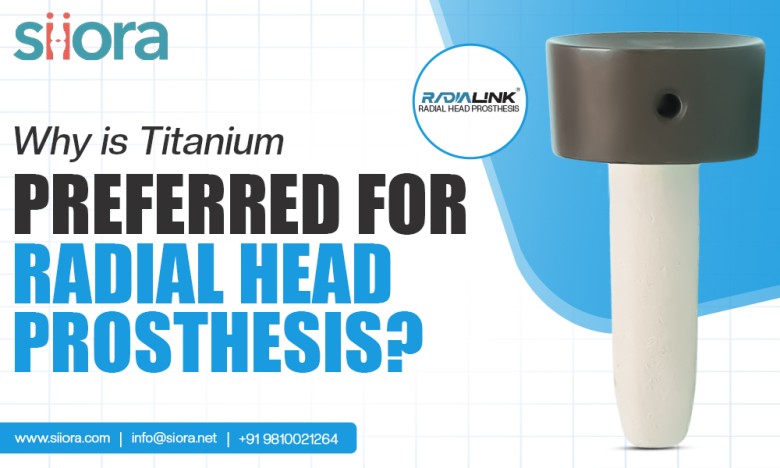
When treating complex fractures of the radial head, especially those that cannot be reconstructed, the radial head prosthesis often becomes the preferred surgical option. In such procedures, the choice of implant material plays an important role in long-term performance and patient recovery. Among the different materials available, titanium has become a widely preferred option in orthopedic surgery. Its mechanical strength, compatibility with the body, and long-term reliability make it a suitable choice for radial head replacement.
Strength with Reduced Weight
One of the main reasons titanium is commonly used for radial head implants is its excellent strength-to-weight ratio. The implant needs to withstand repeated elbow movement and daily mechanical stress without adding unnecessary weight to the joint. Titanium offers strong structural support while remaining comparatively lightweight.
This becomes especially useful in elbow reconstruction, where smooth joint movement is essential for restoring normal arm function.
Better Compatibility with the Human Body
Titanium is known for being highly biocompatible. In simple terms, this means the body generally accepts it well. Once implanted, titanium forms a thin protective oxide layer on its surface, which helps prevent corrosion and reduces the risk of adverse tissue reactions.
Because of this property, the chances of inflammation, irritation, or rejection are significantly lower compared to some other metallic materials. This makes it a dependable choice for long-term implantation.
Supports Bone and Soft Tissue Healing
Another reason surgeons often prefer titanium is its favorable interaction with surrounding bone and soft tissues. The material allows stable fixation while causing minimal irritation to adjacent structures such as ligaments and cartilage.
In radial head prosthesis cases, preserving elbow stability is critical. Since the radial head contributes to valgus stability and load transfer across the elbow, the implant must function naturally within the joint. Titanium helps support this by maintaining stability without compromising tissue healing.
Resistance to Corrosion and Wear
The elbow joint is constantly in motion, which means the implant is exposed to repeated stress over time. Titanium offers excellent resistance to corrosion and wear, making it highly durable for long-term use.
Its corrosion resistance is particularly important because body fluids can gradually affect inferior-quality metals. Titanium’s stable surface helps the implant maintain its integrity even after years of use.
Improved Imaging During Follow-Up
Postoperative follow-up is an important part of orthopedic care. Titanium implants generally produce fewer imaging artifacts compared to heavier metals, allowing clearer evaluation on X-rays and other scans.
This helps surgeons assess implant position, joint alignment, and healing progress more accurately during follow-up visits.
Better Long-Term Outcomes
From a clinical perspective, a titanium radial head prosthesis often provides reliable long-term outcomes. Patients usually experience good joint stability, improved range of motion, and reduced risk of implant-related complications when the prosthesis is properly sized and placed.
Its durability and compatibility with the body contribute to better patient satisfaction over time.
Conclusion
Titanium is preferred for radial head prosthesis because it combines strength, light weight, biocompatibility, and long-term durability. Its ability to function well within the elbow joint while supporting tissue healing makes it an excellent choice for orthopedic surgeons. For patients requiring radial head replacement, titanium continues to remain one of the most trusted orthopaedic implant materials in modern orthopedic practice.













Facebook Conversations
Disqus Conversations