




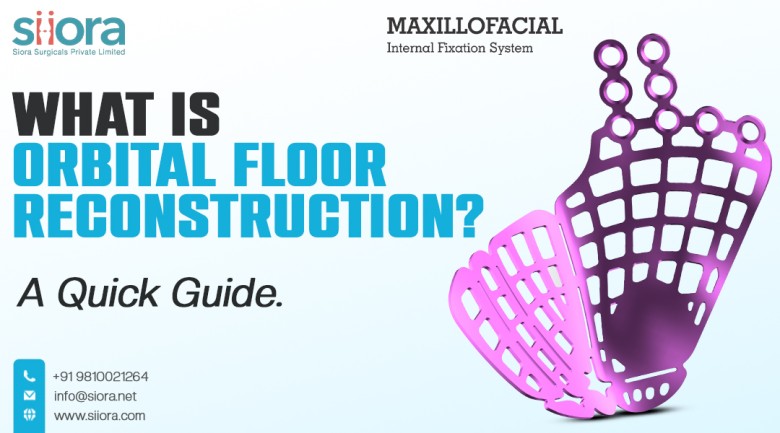
Injuries around the eye can look minor at first, but they are not always simple. One area that often gets affected is the orbital floor—the thin bone that supports the eye from below. When this part breaks,it can lead to problems like double vision, swelling, or a sunken appearance of the eye. Orbital floor reconstruction is a procedure done to repair this damage using a maxillofacial implant or graft, and bring back normal structure and function.
Understanding the Orbital Floor
The orbital floor forms the base of the eye socket. It separates the eye from the maxillary sinus below. Since this bone is quite thin, it can break easily during facial trauma, especially in road accidents, falls, or sports injuries.
When the floor breaks, some of the soft tissues around the eye may slip down into the sinus. This can affect eye movement and even cause the eye to sit lower than normal.
When is Reconstruction Needed?
Not every orbital fracture needs surgery. In mild cases, swelling reduces over time, and the eye returns to its normal position. However, reconstruction becomes necessary when certain issues appear.
Common reasons include:
-
Persistent double vision
-
Restricted eye movement
-
Noticeable sinking of the eye (enophthalmos)
-
Large defects in the orbital floor
Surgeons usually wait a few days after injury for swelling to settle before deciding on surgery, unless the condition is urgent.
How is the Procedure Done?
Orbital floor reconstruction is usually performed under general anesthesia. The surgeon makes a small incision, often inside the eyelid or just below the lashes, to reach the fractured area. This approach helps avoid visible scars.
The displaced tissues are gently lifted back into place. After that, the damaged bone is supported using a CMF implant, such as an orbital plate or graft. The goal is to rebuild the floor so it can properly hold the eye again.
The procedure itself is precise and requires careful handling of delicate structures around the eye.
Materials Used in Reconstruction
Different materials can be used to repair the orbital floor. These include titanium meshes, porous polyethylene trauma implants, or sometimes bone grafts taken from the patient.
The choice depends on the size of the defect, the surgeon’s preference, and the patient’s condition. Each material has its own advantages, but all aim to provide stable support and allow proper healing.
Recovery and Healing
Recovery is usually smooth if the surgery is done on time and followed by proper care. Patients may experience mild swelling or bruising for a few days. Most are advised to avoid blowing their nose or putting pressure on the area during early healing.
Vision and eye movement are closely monitored during follow-up visits. In many cases, patients notice improvement within a few weeks.
Conclusion
Orbital floor reconstruction is an important procedure in managing facial injuries involving the eye socket. While not every fracture needs surgery, timely intervention in the right cases can prevent long-term problems. With careful technique and proper planning, the procedure helps restore both function and appearance, allowing patients to return to normal life with confidence.














Facebook Conversations
Disqus Conversations