




At Grey Medical, we understand that the success of any surgical procedure heavily relies on the precision and quality of the instruments utilized. For decades, our mission has been to serve as your trusted partner in premium-quality surgical instruments by manufacturing tools that seamlessly align with a surgeon's skill. Among the most fundamental yet diverse tools in the operating room are cutting instruments, which vary significantly based on their intended application. Exploring the array of surgical scissor types reveals how delicate design alterations can dramatically impact tissue handling and procedural outcomes. With advanced metallurgy and ergonomic engineering, modern medical scissors have evolved to ensure cleaner cuts, reduced hand fatigue, and optimal tactile feedback for medical professionals worldwide.
Mayo Scissors and Thick Tissue Dissection
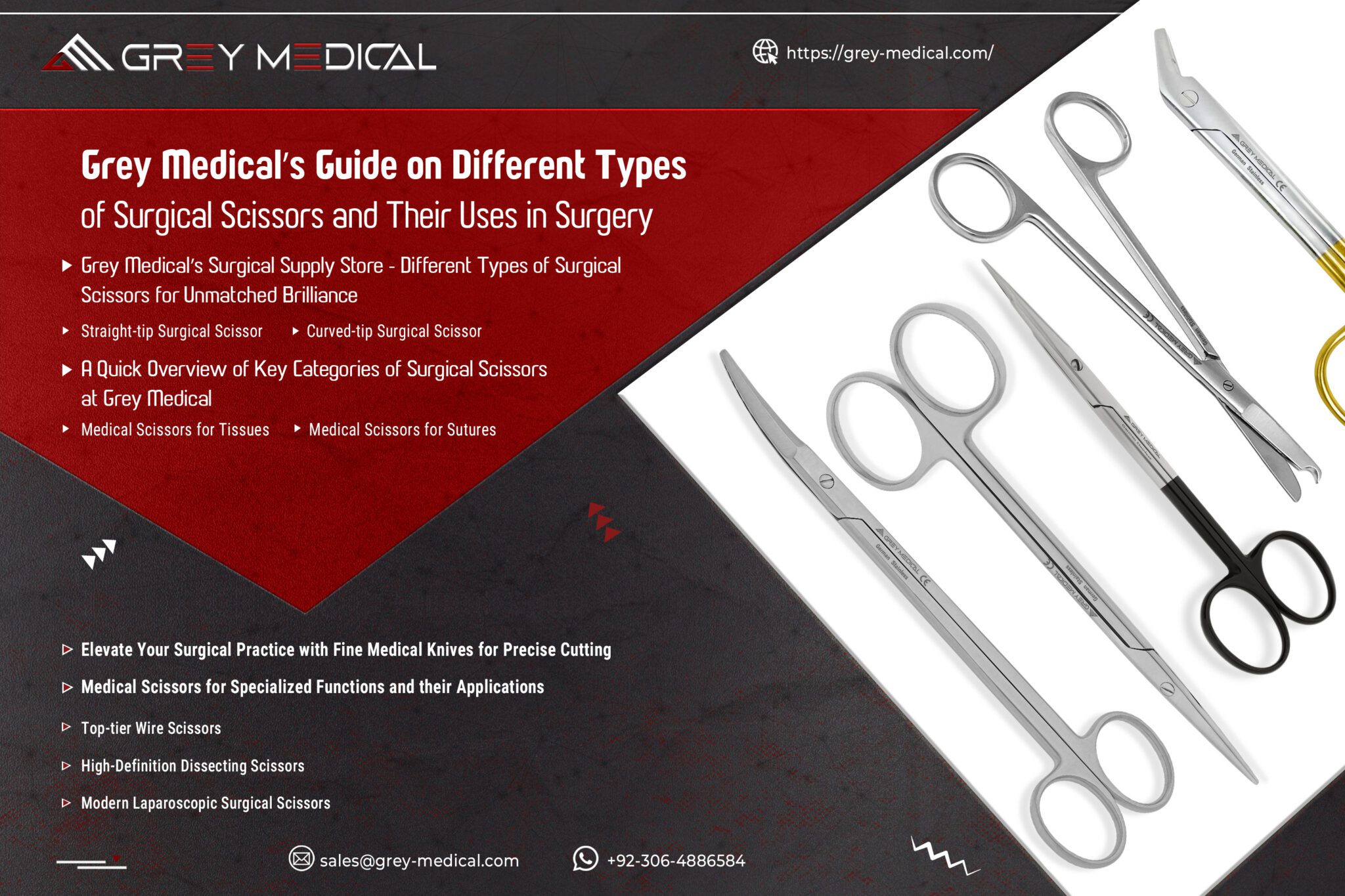
When navigating dense bodily structures, surgeons require an instrument that combines structural integrity with immense cutting power. The Mayo scissor stands out as one of the most robust and widely recognized surgical scissor types found in standard surgical trays today. Characterized by its thick, heavy blades and slightly rounded tips, this tool is specifically engineered for dissecting tough tissues such as fascia, muscles, and tendons. Available in both straight and curved configurations, the straight variant is typically reserved for cutting sutures and heavy dressings, while the curved model allows for deeper tissue penetration with minimal trauma. Medical practitioners rely on this specific design to execute clean cuts through resilient layers without risking structural bending or dulling during critical operations.
Metzenbaum Scissors and Delicate Tissue Manipulation
In stark contrast to heavy-duty cutting tools, procedures involving fragile internal organs and thin membranes demand a significantly gentler approach. The Metzenbaum scissor represents the pinnacle of delicate dissection among the various surgical scissor types available to modern practitioners. Featuring longer handles relative to its shorter, thinner blades, this instrument offers unparalleled control and a maximized line of sight during intricate deep-tissue procedures. Surgeons frequently employ metzenbaum scissors vs mayo for isolating blood vessels, dissecting under thin skin flaps, or working within the thoracic and abdominal cavities. The unique balance of this tool prevents accidental piercing of surrounding vital structures, ensuring that delicate pathways remain protected throughout the operation.
Iris and Micro Scissors for Specialized Procedures
As surgical techniques advance further into the realms of microsurgery, ophthalmology, and plastic reconstruction, the scale of instrumentation must shrink accordingly. Iris scissors, originally designed for intricate ophthalmic procedures, highlight the incredible diversity inherent in modern surgical scissor types. These compact, exceptionally sharp instruments feature fine, pointed tips that allow for pinpoint accuracy when trimming minute tissue segments or sutures. Beyond eye surgery, micro-scissors equipped with spring-action handles are heavily utilized in neurosurgery and vascular procedures where traditional ring-handled tools would be too cumbersome. By providing microscopic precision, these specialized variations empower doctors to operate safely within incredibly confined anatomical spaces.
Suture and Utility Scissors in Post-Operative Care
The utility of cutting instruments extends far beyond the active dissection phase of a surgical procedure, playing a vital role in preparation and post-operative management. Understanding utility-focused surgical scissor types, such as Spencer suture removal scissors or heavy bandage shears, is crucial for maintaining efficient clinical workflows. Suture scissors often feature a small hook or notch on one blade designed to slip effortlessly underneath tight stitches to lift and cut them cleanly without pinching the patient's skin. Meanwhile, angled bandage scissors utilize a blunt, flattened lower tip to safely glide along a patient's limb underneath tough plaster or gauze dressings. These practical designs minimize patient discomfort and streamline routine bedside care, demonstrating that precision engineering is just as vital during recovery as it is under the operating room lights.
The Grey Medical Commitment to Quality and Longevity
Choosing the right instrument involves more than just selecting a specific blade shape; it requires choosing a manufacturer committed to structural excellence and longevity. Grey Medical takes pride in delivering precision-crafted tools designed to meet the rigorous demands of surgeons, doctors, and medical professionals worldwide. Every single instrument we produce undergoes stringent quality control checks, ensuring that edge retention, joint alignment, and corrosion resistance exceed standard industry expectations. By utilizing high-grade stainless steel and tungsten carbide inserts, we guarantee that our instruments maintain their razor-sharp integrity through countless sterilization cycles. We remain dedicated to supporting healthcare providers by supplying dependable tools that enhance surgical precision and elevate patient care every single day.
Conclusion
Selecting the appropriate tool from the vast array of available cutting instruments is a decision that directly influences surgical efficiency and patient safety. From the heavy-duty dissection capabilities of the Mayo design to the microscopic precision of fine iris instruments, each variation serves a distinct, indispensable purpose in modern medicine. Grey Medical remains steadfast in its devotion to crafting premium-grade solutions that cater to these diverse clinical requirements across the globe. By investing in superior craftsmanship and understanding the unique nuances of each instrument, medical professionals can continue to perform complex procedures with absolute confidence and peerless accuracy.














Facebook Conversations
Disqus Conversations